

Bookshelf and studio speakers are light compared with the energy they throw into a room. If the stand under them rings or wobbles, that structure starts talking along with the drivers—usually as smeared bass and a vague stereo image. Adding mass to the stand base, or using a purpose‑built heavy stand, is one way to calm that motion so the box behaves more like it’s bolted to solid ground instead of perched on a tuning fork.
According to the acoustic specialists at Sound on Sound, when a speaker driver moves forward to create a sound wave, it exerts an equal and opposite force on the cabinet; if the stand is lightweight, the entire speaker can “recoil” or vibrate microscopically, which smears the sharp transients of the audio signal. A heavy-base stand—often made of steel and filled with kiln-dried sand or lead shot—uses its massive weight to anchor the speaker in place, ensuring that 100% of the driver’s energy goes into moving the air rather than shaking the stand .
What Heavy Bases Actually Do
A heavy base raises the mass of the stand‑speaker system, which lowers the frequency where stand resonances occur and reduces how much the cabinet can rock back and forth when the woofer moves. With less movement turning into delayed vibrations, bass transients tighten up and the midrange often sounds clearer, especially on lightweight cabinets that would otherwise dump energy into a flimsy stand or shelf.
Mass by itself isn’t enough if the stand rings like a bell; good designs combine weight with stiff, well‑damped construction and either spikes (to couple into solid floors) or compliant feet/pads (to decouple from bouncy wooden floors). Get that balance right and you usually hear more precise imaging and better low‑end definition; get it wrong and you just move the problem around.
When Heavy Stands Help the Most
Heavy bases tend to make the biggest difference when:
- The speakers are on suspended wooden floors or light furniture that can be excited by bass, turning the whole structure into a secondary soundboard.
- The speaker cabinets themselves are budget/lightweight, so draining vibration into a more massive, stable support tames boom and cabinet talk.
- You also use proper isolation or coupling at the contact points—cones, spikes, or quality pads—so the mass and the floor work together instead of fighting each other.
On dense concrete floors with already solid cabinets, the stand’s job leans more toward getting height and placement right than radically changing tone. In those cases, many listeners report that changes in stand height and distance from walls matter more than going from “medium” to “very heavy” bases.
How This Relates to Real‑World PA and Party Speakers
With powered PA or party boxes—like 12‑inch Bluetooth/PA systems used on floor stands—the same physics apply at a bigger scale. The stand’s stability and how it handles vibration affect how much low‑end energy gets fed into a resonant stage or pole, which can blur bass or make certain notes ring. Heavy, well‑braced poles with wide tripod bases, or wall brackets anchored into solid structure, keep the box from rocking and help the speaker behave more like it does in free space instead of “singing” with the stand and floor.

Large portable speakers also dump more energy into the support than small nearfields; in those cases, combining a strong, possibly sand‑filled base with appropriate decoupling or coupling to the floor can noticeably clean up the low end and keep what you hear closer to what the box was designed to produce.
Products That Get It Done
5 Core Speaker Stand Pair – Adjustable 31″–54″ PA/DJ Tripod (Heavy Duty, 35mm, 132 lb)
Heavy-duty pair of tripod speaker stands constructed from steel with ABS components, supporting up to 132 lb per stand for PA/DJ, studio monitors, or lighting. Height adjusts from 31″ to 54″ via a pin-lock mechanism, with universal 35mm pole inserts fitting most speaker cabinets and a wide tripod base for stability. Available in many colors, these lightweight stands (exact weight unspecified but noted as portable) include rubber feet to prevent slipping on stages or floors.

Ideal for mobile DJ setups or fixed installs needing mid-height positioning without excessive weight.
- Pair of steel/ABS tripods; 132 lb capacity each.
- Height: 31″–54″; 35mm compatible poles.
- Use: PA/DJ speakers, monitors, lights; rubber feet.
Rockville RVES1 – Adjustable Tripod Speaker Stands
Pair of universal tripod stands made from thick heavy-duty steel, rated for 100 lb per stand and suitable for speakers or lighting rigs. Height range spans up to 71″ with a 32″ base spread for solid footing, and they fold compactly for transport in the included carry bag. Universal design accepts standard speaker poles and features sturdy, expandable legs for reliable performance in DJ/PA environments.
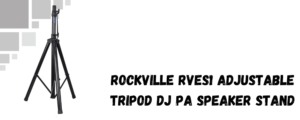
Total pair weighs about 12.6 lb, emphasizing portability for gigs and events.
- Pair of metal tripods; 100 lb capacity each.
- Max height: 71″; 32″ base spread; carry bag included.
- Use: DJ/PA speakers, lights; foldable/portable.
Conclusion
Heavy‑base speaker stands can improve sound accuracy, but not because of the weight alone; they work when that mass, stiffness, and the right feet keep the stand from ringing and stop the floor from joining in. In problem rooms or with lightweight cabinets, that usually means tighter bass and more stable imaging, while on solid floors with already dead furniture the gains are smaller and placement matters more than raw kilos
Here you can also find amazing drum thrones; alternatively, browse our product page to find the best keyboard bench, audio mixers, drum mics, piano bench, keyboard stand, speakers, party speakers, and more.