
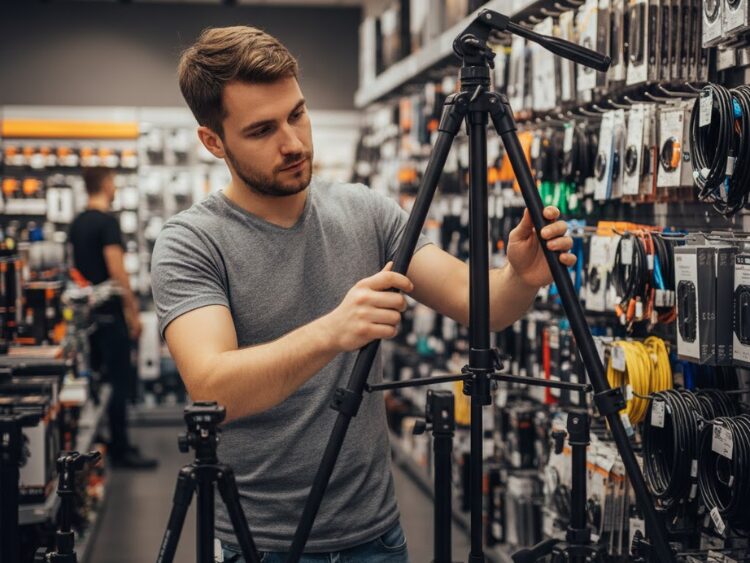
If the speakers are in the wrong vertical spot, everything else in the studio is second‑guessing. Too low and the tweeters fire at your torso; too high and you’re listening off‑axis, guessing at top‑end balance and stereo image. Height is thankfully one of the simplest bits to fix: measure where your ears are when you work, put the tweeters there (or just above), and get stands that can actually hit that number without living at the wobbly extremes of their travel.
Once that’s sorted, you can worry about triangles, wall distance, and acoustic treatment. Until then, every mix is filtered through the wrong part of the speaker.
According to the recording experts at Sound on Sound, the industry standard is to position your monitors so that the tweeters (the high-frequency drivers) are at exactly the same height as your ears when you are seated in your normal mixing position . This is because high frequencies are extremely directional; if the stands are too low, the crisp details of your cymbals and vocals will literally pass beneath you, leaving your mix sounding dull and muddy.
Most professional stands are adjustable between 30 and 45 inches to accommodate standard desk and chair heights, allowing you to align the “acoustic axis”—the point halfway between the woofer and tweeter—directly with your ears to achieve the most accurate stereo imaging and frequency balance.
Find Your Ear Height, Then Aim the Tweeter
Sit in your normal working posture at the mix position—chair height you actually use, not the photo pose—and measure from the floor to the center of your ear. For most seated adults, that lands somewhere around 36–48 inches, with many studio guides quoting 47–55 inches as a typical monitor axis range. That measurement is your stand‑height target: you want the tweeter, or the line between tweeter and woofer, to sit at or just slightly above that point.
If the monitors end up a touch high because of furniture, tilt them down slightly so the tweeter axis points at your ears—but keep the tilt modest (no more than about 10–15 degrees) so you don’t move in and out of the sweet spot every time you lean forward or back. All the usual placement advice—equilateral triangle, toe‑in, some space from walls—assumes you’ve already aligned height like this.
Using Adjustable Tripod Stands in a Studio
5 Core Speaker Stand – Adjustable 31″–54″ PA/DJ Tripod (Heavy Duty, 35mm, 132 lb)
Pair of steel/ABS tripod speaker stands rated for 132 lb per stand, adjustable from 31″ to 54″ with pin-lock height settings and universal 35mm pole inserts for PA/DJ cabinets, monitors, or lights. Wide tripod base with rubber feet ensures stability on stages or floors; lightweight design aids portability for mobile setups.
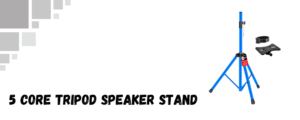
Targets DJs and bands needing reliable mid-height elevation without crank mechanisms.
- Capacity: 132 lb each; height 31″–54″.
- 35mm compatible; rubber feet; sold as pair.
Uline Tripod Stand – H-4968 (24″ Height, Conveyor Accessory)
Compact 24″ fixed-height tripod stand from Uline’s conveyor lineup, constructed for industrial use supporting signage, lights, or lightweight display components up to unspecified load (typically 20–50 lb class for similar models). Steel tubing with tripod base suits warehouse/assembly environments rather than audio applications; no height adjustment or speaker-specific adapters listed.
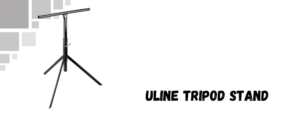
Positioned for material handling rather than PA/DJ staging.
- Fixed 24″ height; industrial tripod base.
- Use: conveyor/signage support; not audio-optimized.
Conclusion
Choosing the right stand height for studio monitors is mostly measuring once and committing: find your real ear height at the desk, put the tweeters there or just above, and pick stands whose adjustment range hits that number without living on the edge of stability. Adjustable heavy‑duty tripods like the 5 Core 31–54 inch stand make that easy to dial in, turning height from a guess into a fixed, repeatable part of your monitoring chain instead of another variable your mixes have to fight through.
Here you can also find amazing drum thrones; alternatively, browse our product page to find the best keyboard bench, audio mixers, drum mics, piano bench, keyboard stand, speakers, party speakers, and more.