

Speakers don’t really sound like themselves until they’re at the right height and aimed properly. Whether you get there with wall brackets or floor stands changes more than just the look: it affects how easily you can tune placement, how much space the system eats, and how locked‑in the layout becomes. The “better” choice isn’t universal; it depends on the room, the speakers, and how often you like to rearrange gear.
According to the acoustic experts at Sound on Sound, floor stands are generally superior for critical listening because they allow you to move the speakers away from the wall, which prevents “boundary reinforcement”—a phenomenon where bass frequencies bounce off the wall and become muddled or “boomy.” Floor stands also offer the flexibility to perfectly “toe-in” your speakers toward your seat to create a precise stereo image.
Wall mounts, however, are the “gold standard” for small rooms or home theaters where floor space is a premium. While they are more permanent and can sometimes cause early sound reflections, they allow you to mount speakers at or above ear level and angle them downward, which is ideal for surround sound or Dolby Atmos height channels. If you choose wall mounts for your main speakers, look for articulating brackets that provide at least a few inches of clearance from the wall to help the speaker “breathe” and maintain better clarity.
Pros and Cons of Wall-Mounted Stands
Wall mounts shine when space and cleanliness are the priority. Getting speakers off the floor keeps them out of traffic paths, opens up the room visually, and makes it easier to hide cables in walls or along trim. High mounting is also ideal for surrounds, Atmos channels, and background music where coverage matters more than pinpoint imaging.
The trade‑offs are permanence and effort. Once brackets are drilled and aligned, changing height or toe‑in is limited; if you move the couch or desk, the speakers may no longer line up with the new sweet spot. Installation also means wall holes and proper anchors, which is less friendly in rentals or on thin partition walls, and isolation can be tricky on anything but solid masonry.
Pros and Cons of Floor Speaker Stands
Floor stands are about flexibility. A decent pair lets you slide speakers forward from the wall, tweak toe‑in by a few degrees, and experiment with spacing until imaging and bass balance lock in—without picking up a drill. They’re ideal if you rearrange rooms, change speakers often, or want to dial in a listening position with audiophile precision.
The downsides are footprint and stability. Stands take floor space, expose wiring unless you manage it carefully, and can be vulnerable to bumps, kids, or pets if weight and base size are marginal. On suspended wooden floors, you may also need isolation pads or spikes to stop energy from feeding straight into the structure.
Where Gator Wall Mounts and 5 Core Tripods Fit
Gator GFW-SPK-WM100 (Wall Mount)
The Gator Frameworks GFW-SPK-WM100 is a pair of wall-mount speaker brackets designed for permanently installing PA speakers or monitors on walls, saving floor space in venues, studios, churches, or rehearsal rooms. Each mount supports up to 100 lbs and uses a standard 35 mm pole, with multi-angle adjustability so you can tilt and aim the speaker for optimal coverage, while a foam-padded, rubberized base helps prevent cabinet scratches and keeps the speaker secure. These are ideal when you want a clean, fixed installation and do not need to move stands from gig to gig.
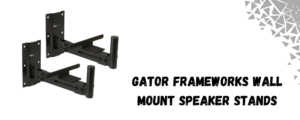
- Wall-mounted speaker brackets, pair, 35 mm (1.38″) mount.
- Weight capacity up to 100 lbs (45 kg) per mount, adjustable angle, foam/rubberized base.
- Suited for permanent installs in venues, studios, or houses of worship where floor space and a tidy look matter.
5 Core Adjustable Speaker Stand Pair (Tripod)
The 5 Core speaker stand pair is a set of height-adjustable tripod stands intended for PA and DJ speakers, offering easy transport, fast setup, and broad compatibility for mobile sound reinforcement. Built from heavy-duty metal with ABS components, each stand adjusts from 31 to 54 inches and supports up to 132 lbs, using a standard 35 mm pole mount so it fits most PA cabinets while the tripod base and anti-slip rubber feet give stability on different stages and floors. The foldable design and relatively light weight make them practical for DJs, bands, rental rigs, and event setups where stands need to move frequently between locations.
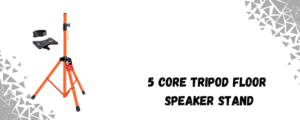
- Tripod floor stands, pair, height adjustable 31″–54″ with 35 mm pole mount.
- Weight capacity 132 lbs per stand, heavy-duty metal frame with anti-slip rubber pads, foldable/portable.
- Best for mobile PA/DJ work, live events, and temporary setups where flexibility and portability are required.
Conclusion
Wall‑mounted speaker stands are better when you have a stable layout, solid walls, and a priority on clean floors and hidden cabling; once installed, they’re tidy and out of the way but essentially permanent. Floor stands win when you care about fine‑tuning placement, live in a rental, or run portable PA—trading some space and visual bulk for easy repositioning and future speaker changes. In that landscape, Gator’s GFW‑SPK‑WM100 brackets make sense for fixed, heavy‑duty wall installs, while 5 Core’s tripods are the practical choice for flexible rigs that move and evolve with your room or show.
Here you can also find amazing drum thrones; alternatively, browse our page to find the best keyboard bench, audio mixers, drum mics, piano bench, keyboard stand, speakers, party speakers, and more.